
4 Best Places to Find Poppy Fields in the Bay Area
Every March, my phone starts blowing up with photos from my SoCal friends. You know the ones—those endless, glowing fields of orange poppies that look like something straight out of a dream. And as much as I love a good road trip, driving 6+ hours to the Antelope Valley isn’t always in the cards for a weekend.
I was determined to find that same magic closer to home. To me, poppies are the ultimate symbol of California spring. There is just something about that specific, vibrant orange that you can’t find anywhere else in the world.
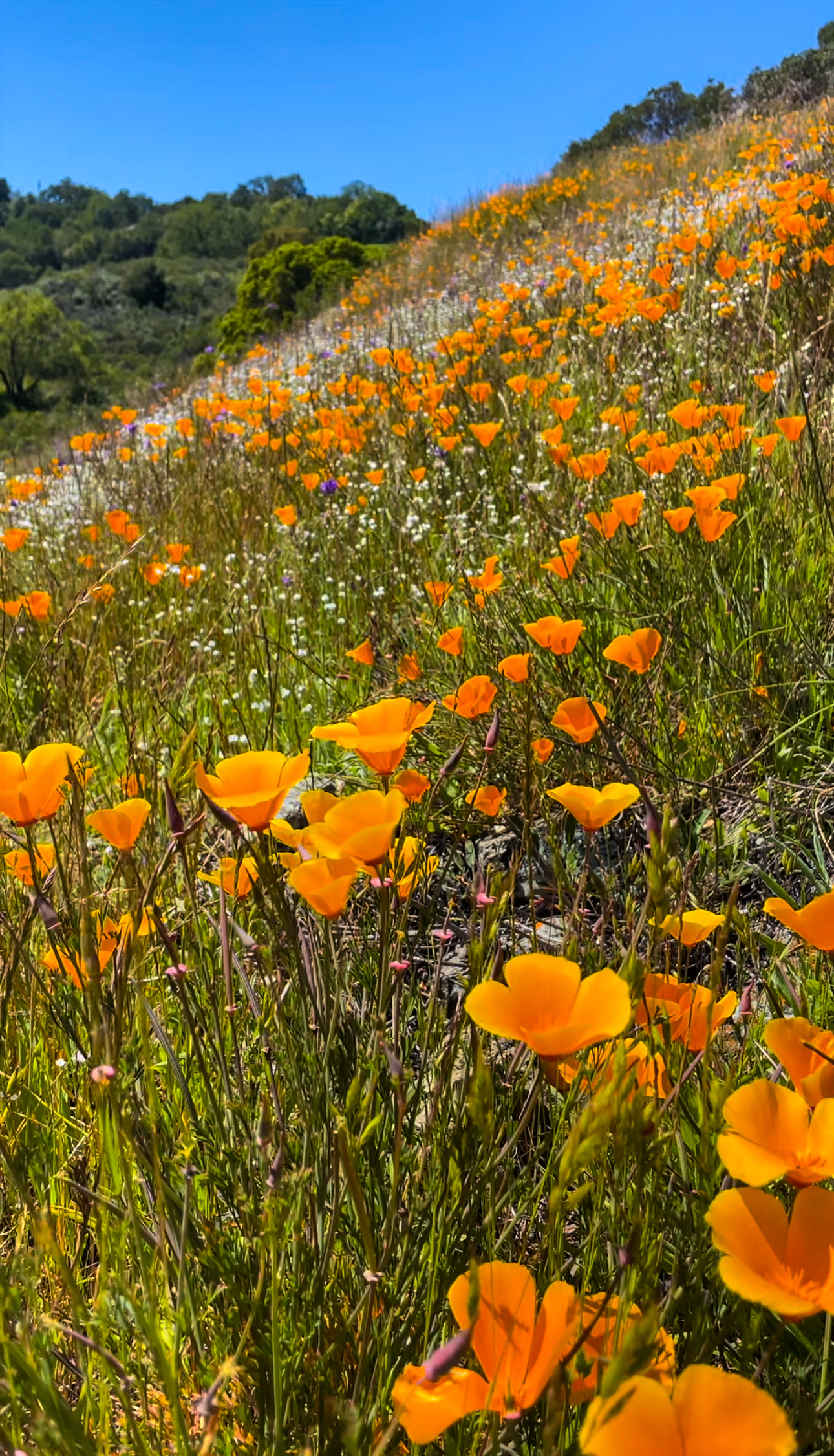
After hiking dozens of trails, I’ve finally narrowed down the absolute best poppy fields in the Bay Area. Now, let’s be real for a second: we don’t quite have the massive, miles-long carpets of the Antelope Valley Poppy Reserve up here. But if you’re looking for that perfect burst of orange against our emerald-green hills, these spots will definitely cure your poppy fever!
In this post, I’m breaking down the best places to find poppy fields right here in the Bay Area, exactly when and how to time your visit (because poppies are surprisingly moody!) and a bonus list of spots just outside the Bay if you are feeling up for a longer drive.
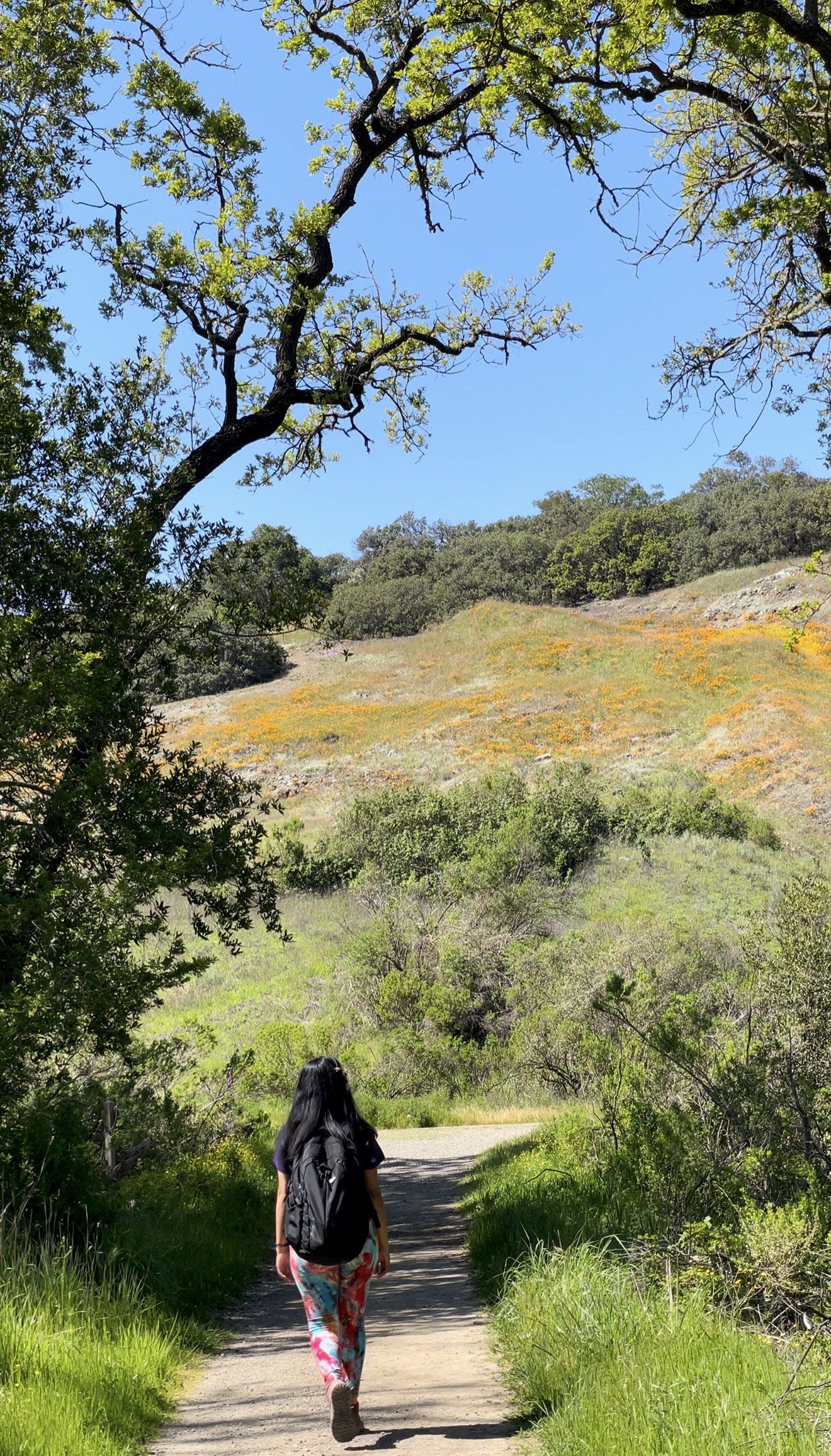
Table of Contents
When to visit to the Poppy fields in the Bay Area
Timing is everything when it comes to these orange beauties. Unlike some wildflowers that stay open 24/7, poppies are actually a bit “moody.” If you want to catch them at their best, here is the breakdown.
The Season: Mid-March through April
In the Bay Area, we generally start seeing the first pops of orange in mid-March, with the “peak” typically hitting between late March and mid-April.
While some flowers can linger into May, poppies are a bit more sensitive to the heat. Once the hills start turning from that lush California green to golden brown, the poppies usually head out for the year. If you want the most vibrant “carpet” effect, your best bet is almost always the last week of March.
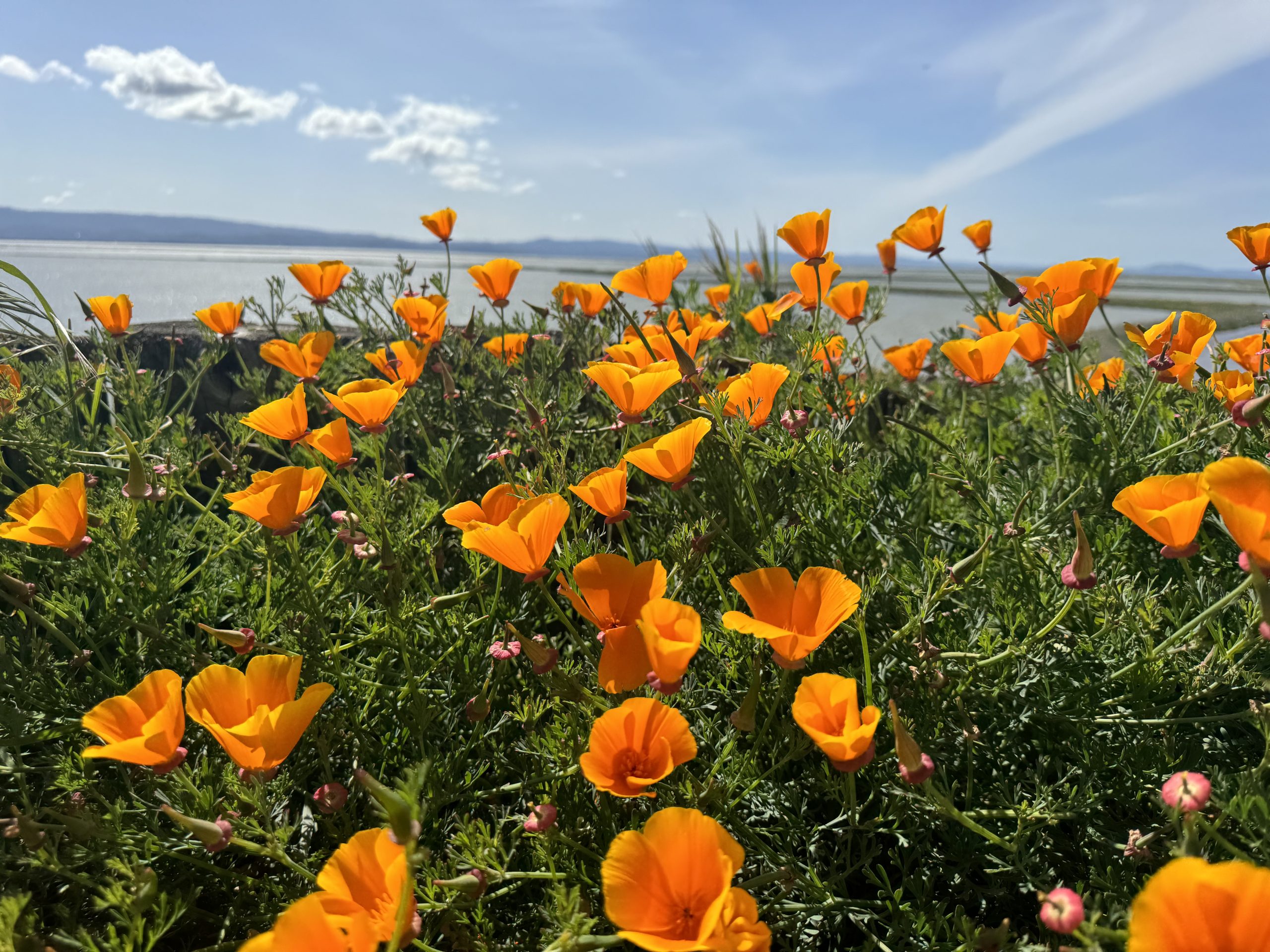
The “Mid-Day” Rule to view Poppies
Usually, I am the first person to tell you to set your alarm for sunrise or head out at golden hour to avoid the crowds and get that perfect light. But for poppies, forget everything I’ve told you about sunrise.
Poppies are nyctinastic (yes, that’s your fancy science word for the day!). It basically means they have a “sleep” cycle. They close up tight at night and stay tucked away during the chilly early morning hours. The Rule of Thumb: To see them in their full, wide-open glory, aim for mid-day (between 11:00 AM and 3:00 PM) when the sun is high and the air is warm. .
Tip: Poppies also tend to “squint” or close up if it’s particularly windy or overcast. If it’s a super foggy or windy day, they might not “wake up” at all, so check the forecast before you drive!
Before you go
Before we get into the trail maps and parking pins, we need to have a serious “trail talk.”
I know, I know—everyone wants that dreamy shot of themselves sitting in a sea of orange. But here is the honest truth: California’s native plants, especially our poppies, are currently in a bit of a fight for their lives. Between invasive species and urban sprawl, these hills are some of the last places they can truly thrive.
When you step off the trail for a photo—even if it’s “just for a second”—you aren’t just squishing a few flowers. You are doing two very permanent things.
- Killing Next Year’s Bloom: Poppies are annuals that rely on dropping seeds to return next year. If they are crushed before they seed, they don’t come back.
- Compacting the Soil: Walking on the dirt packs it down like concrete. This makes it impossible for fragile poppy roots to penetrate the ground and prevents the soil from absorbing the water they need to survive.
We are all lucky enough to enjoy these “superblooms” because previous hikers respected the trails. Let’s make sure we do the same for the people coming after us. Please, stay on the designated paths. You can get amazing photos from the trail edge without “dooming the bloom”!
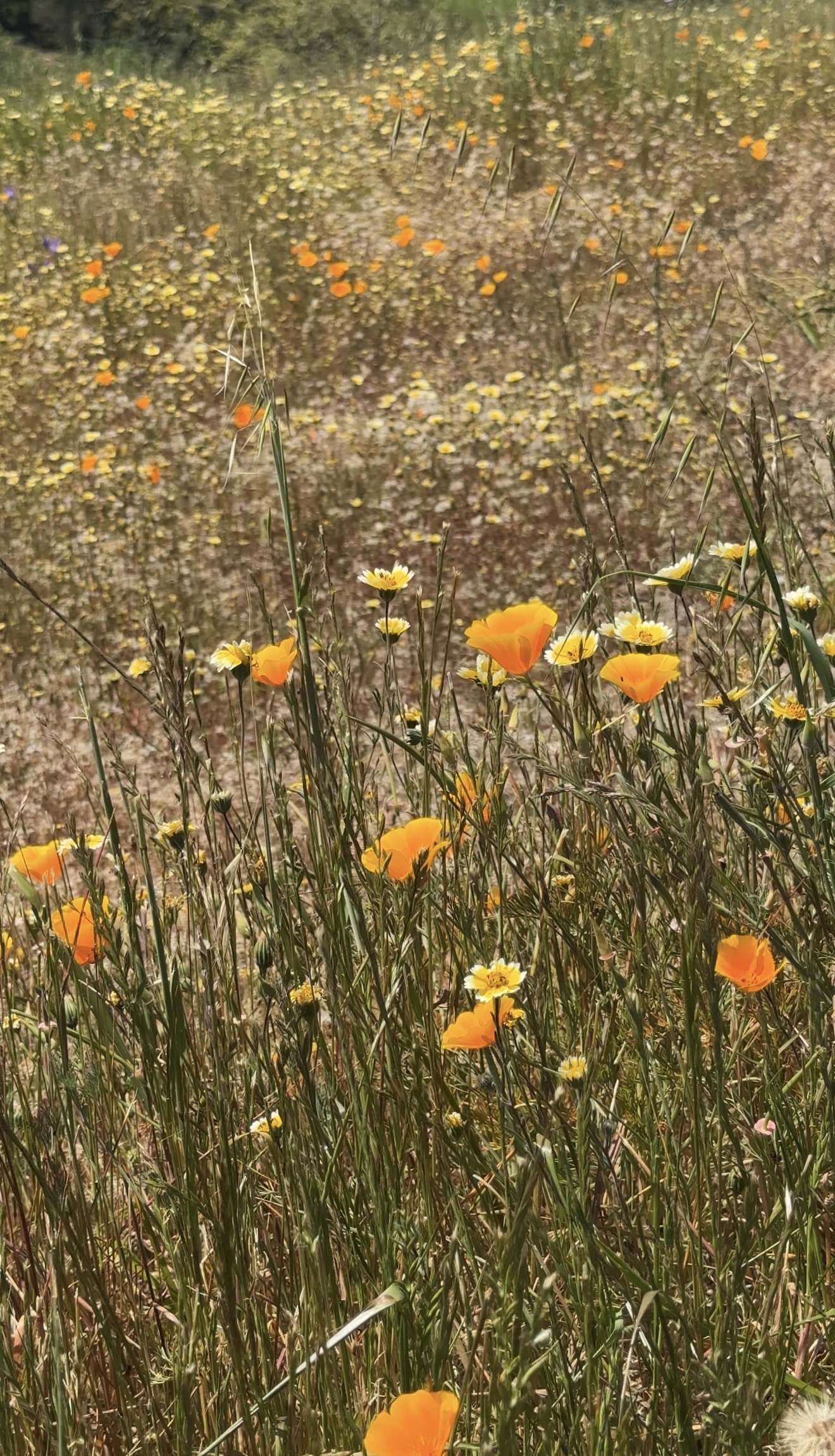
Mt Diablo State Park
If you’re looking for that classic East Bay “superbloom” feeling, Mt. Diablo is the heavyweight champion. While the summit gets a lot of the glory for its views, the lower slopes are where the poppy magic really happens.
It is easily one of the most popular spots in the Bay Area, so expect some company on the trails—especially on sunny weekends. But honestly? Once you see those orange patches glowing against the bright green ridges, you’ll understand why everyone flocks here.
I personally love the Little Pine Creek and Camel Rock Loop. It takes you through some beautiful rock formations (hence the name “Camel Rock”) and opens up into stunning meadows that get carpeted with poppies and lupine.
Trail Info at a Glance:
- Location: Walnut Creek / Clayton
- Trail: Little Pine Creek and Camel Rock Loop
- Distance: 5.7 miles
- Elevation Gain: ~1,000 feet
- Difficulty: Moderate
- Dogs: No. Sadly, dogs are not allowed on the trails at Mt. Diablo State Park (they are only allowed in developed areas like paved roads and campgrounds).
Tip: If you aren’t up for a 5-mile hike, you can actually see massive poppy fields right from North Gate Road as you drive up toward the summit. There are a few pull-outs where you can safely park and snap photos without even breaking a sweat!
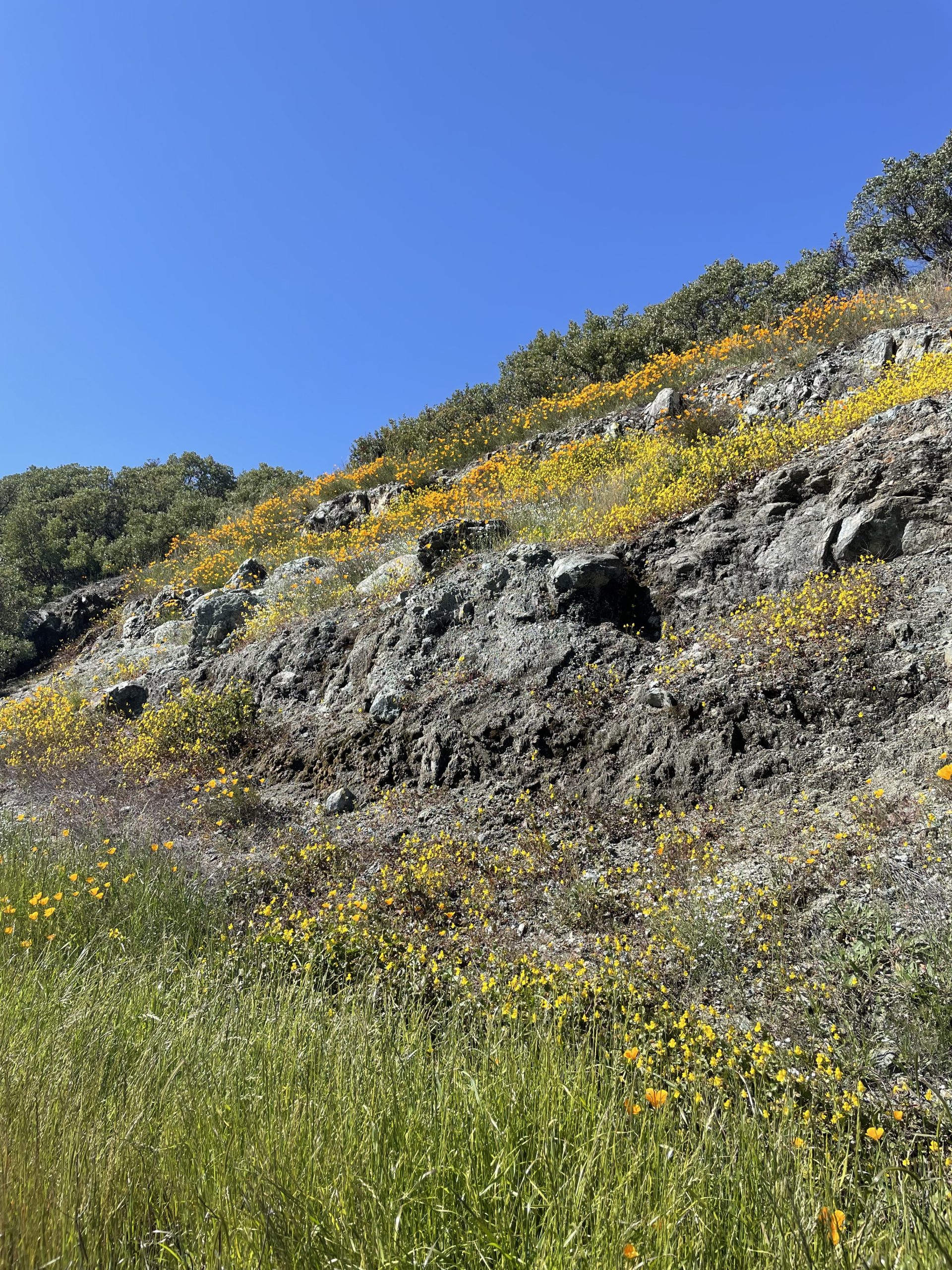
Shell Ridge Open Space
If Mt. Diablo is the “famous” spot, Shell Ridge was the East Bay’s best-kept secret—until it wasn’t. Specifically, the area around Fossil Hill has absolutely blown up on social media over the last couple of years.
While poppies are native to these hills, the spectacular display at Fossil Hill is a labor of love. The Walnut Creek Open Space Foundation and a dedicated group of volunteers spend thousands of hours here every year. They work tirelessly to pull out invasive weeds and carefully sow native California poppy seeds to restore the hills to their natural glory.
Because of this, the area is extremely fragile. Recently, rangers have had to put up more fencing and “stay on trail” signs because people were trampling the newly seeded areas for photos. If you go, please be a hero and stay on the paths—those flowers represent years of “sweat and blood” from local volunteers!
Parking Advice for Shell Ridge Open Space
Because Fossil Hill is nestled right against a quiet neighborhood, the sudden “social media rush” caused some major drama. At one point, there were reports of hundreds of cars trying to jam into a tiny residential street in a single weekend!
To keep the peace, the city now implements temporary “No Parking” zones on weekends in the surrounding neighborhood (especially on Sutherland Drive and Virginia Court). They’ve even been known to close the tiny Sutherland parking lot entirely on busy Saturdays and Sundays.
My Advice: If you visit on a weekend, don’t even try to park on Sutherland. Instead, park at Howe Homestead Park (2950 Walnut Blvd). It’s an official alternative entrance with a real parking lot. It adds a bit of a walk to reach the poppies, but it’s much more ethical and saves you from a potential ticket.
Trail Info at a Glance
- Location: Walnut Creek
- Trail: Fossil Hill, Briones to Mt. Diablo, and Ginder Gap Loop
- Distance: ~3.1 miles
- Elevation Gain: ~600 feet
- Difficulty: Easy to Moderate
- Dogs: Yes! Unlike Mt. Diablo, dogs are welcome here. Just make sure to keep them on a leash and away from the flower beds.
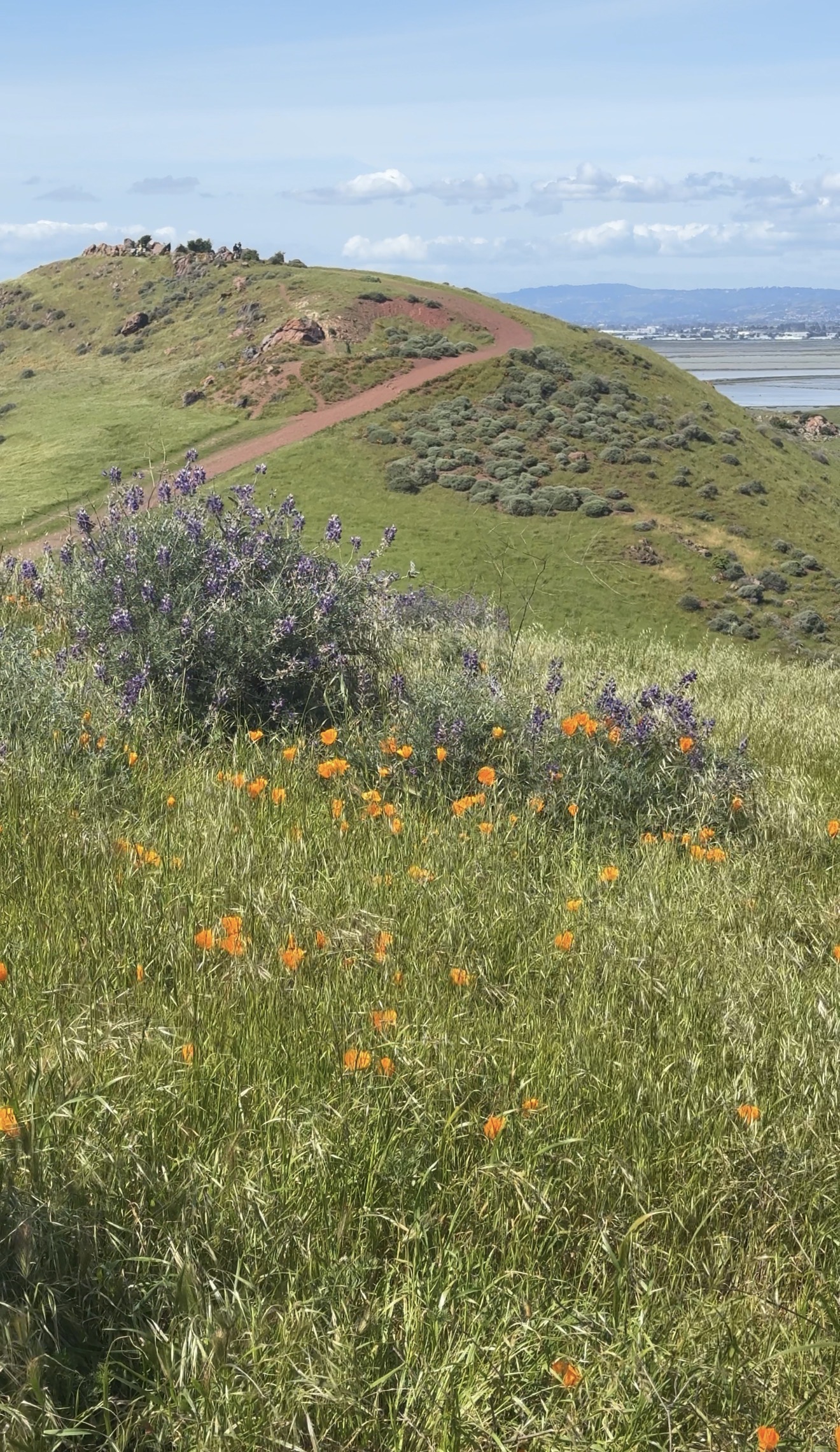
Almaden Quicksilver County Park
If you’re looking to escape the East Bay crowds and head down toward San Jose, Almaden Quicksilver is an absolute must. This park is a “hidden gem” in the truest sense—it’s massive, rugged, and filled with fascinating mining history.
I hiked the West Loop here in early April, and honestly, it took my breath away. While the other spots on this list are all about that iconic California orange, Almaden Quicksilver offers a slightly different palette.
The highlight for me was seeing a massive, vibrant patch of yellow poppies painting the hillside from a distance. It looked like someone had tipped over a giant bucket of golden paint! As you get closer, you’ll realize it’s not just poppies—this trail is a wildflower buffet. You’ll find pops of purple lupine, blue dicks, and bright orange poppies all mingling together.
Trail Info at a Glance
- Location: South San Jose (New Almaden)
- Trail: Almaden Quicksilver West Loop
- Distance: ~4.5 miles
- Elevation Gain: ~1,100 feet
- Difficulty: Moderate
- Dogs: Yes! Dogs are allowed on leash, making it a great alternative if you want a big “state park” feel without the strict “no-dog” rules of Mt. Diablo.
Coyote Hills Regional Park
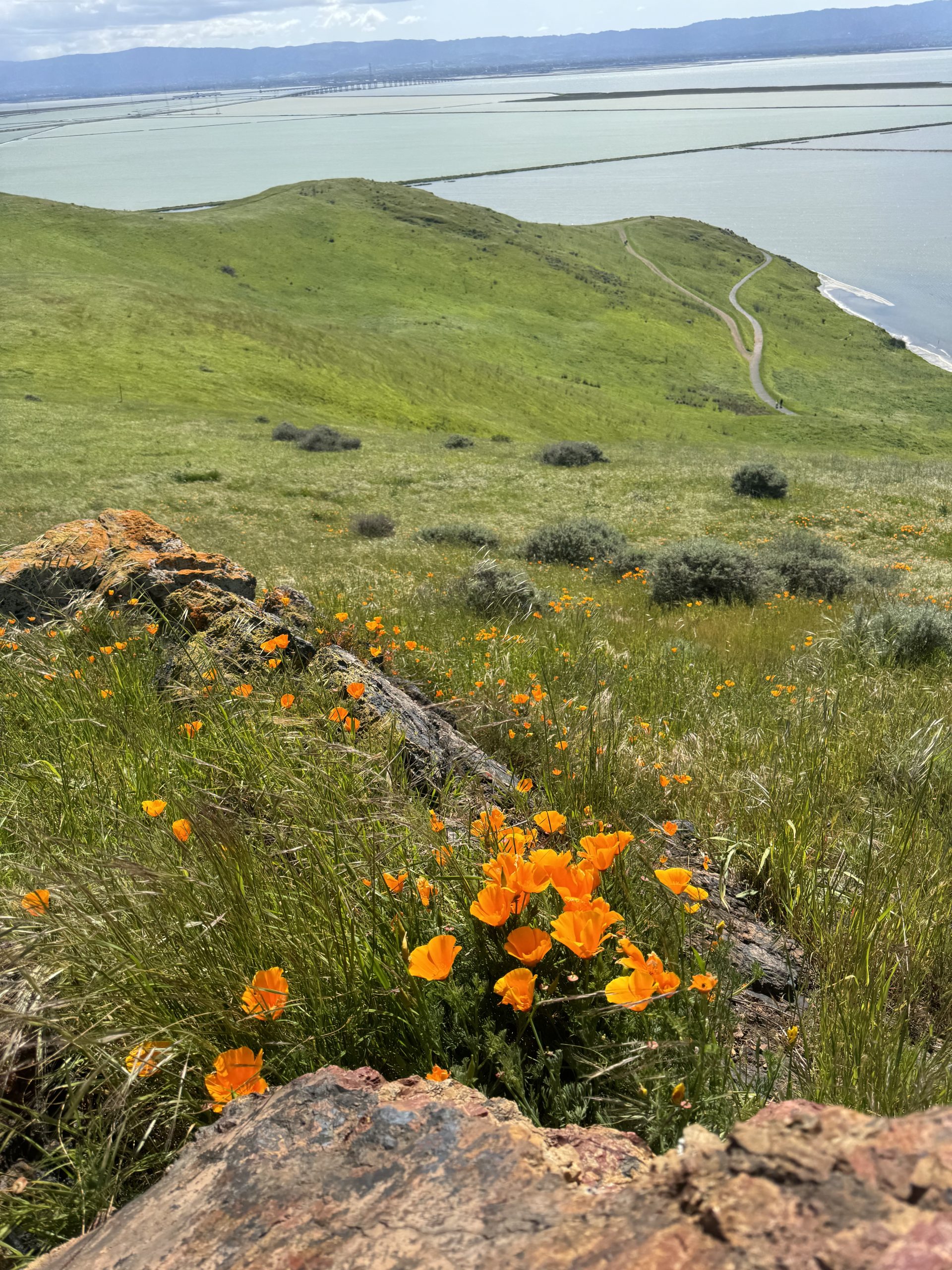
Coyote Hills Regional Park in Fremont is a super popular local spot, and while you won’t find massive, sprawling fields here, the quality of the view makes up for the quantity of flowers.
The magic happens on the Red Hill trail. There is a beautiful seating area at the top that gets surrounded by bright orange poppies during peak season. It is the perfect spot to catch your breath and soak in the scenery. On a clear day, the contrast between the vibrant orange petals and the deep blue of the San Francisco Bay is absolutely stunning—it’s a photographer’s dream!
Trail Info at a Glance
- Location: Fremont
- Trail: Bayview, Red Hill, and Soaproot Trail Loop
- Distance: ~3.5 miles
- Elevation Gain: ~350 feet
- Difficulty: Easy to Moderate
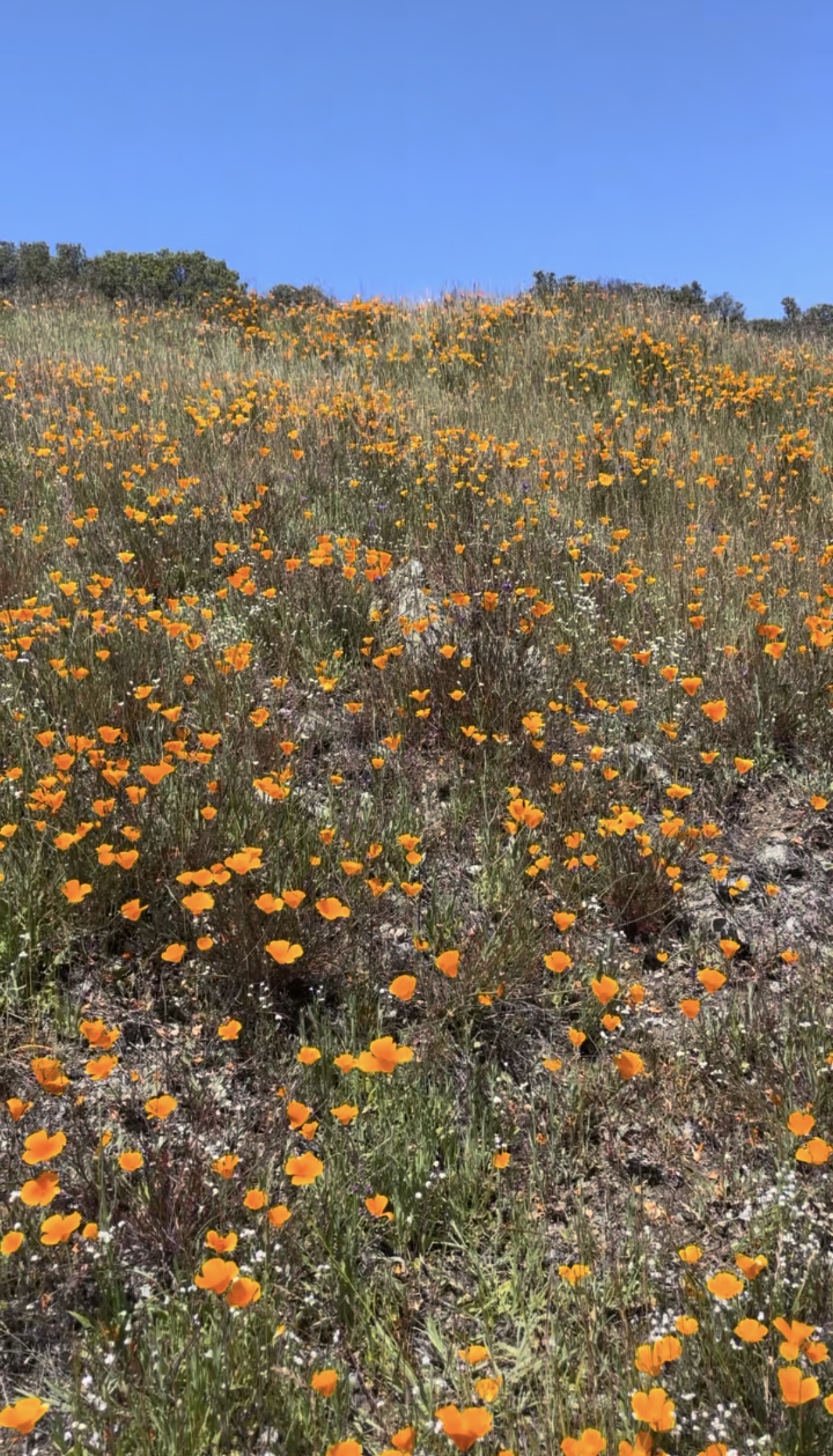
- Dogs: Yes! Dogs are welcome here on a leash, so feel free to bring your furry co-pilot along for the hike.
Bonus spots: Poppy Fields Outside the Bay Area
If you have a free weekend and a full tank of gas, these legendary spots are famous for a reason. Here are a few places where you can see those “endless” carpets of orange if you’re up for a road trip.
- Antelope Valley California Poppy Reserve: This is the most famous spot in the state (near Lancaster) with miles of rolling hills that turn neon orange. It’s a 5-6 hour drive, but seeing that much concentrated color at once is a total bucket-list experience.
- North Table Mountain Ecological Reserve: Located near Oroville (about 2.5 hours away), this basalt mesa features stunning waterfalls and vernal pools tucked between fields of poppies. Just a heads-up: you’ll need to buy a CDFW Lands Pass online before you arrive!
- Carrizo Plain National Monument: About 4 hours south, this is one of the most remote places in California. It’s famous for “technicolor” hillsides where poppies mix with yellow goldfields and purple phacelia for a crazy rainbow effect.
- Bear Valley (Colusa County): A shorter drive (about 2 hours north of the Bay), this valley floor is known for stunning wildflower displays right along the road. It’s a great option if you want to see massive blooms without a strenuous hike.
Spring in the Bay Area is incredibly short, and these orange-covered hills will be gone before you know it. Hopefully, this guide helps you find your own slice of poppy heaven without having to make the 6-hour trek down south.
Just a final reminder: please keep your boots on the trail so these native beauties can drop their seeds and come back even stronger next year. Happy Hiking!
If you want more local guides and “hidden gem” discoveries delivered straight to your inbox, subscribe to the blog! It’s the best way to keep up with our California weekend wanderings.
Plus, you’ll get free access to the Wander Vault. This is my private collection of hand-curated Google Maps—all ready to live on your phone so you can find the exact coordinates of my favorite viewpoints and trailheads without the guesswork.